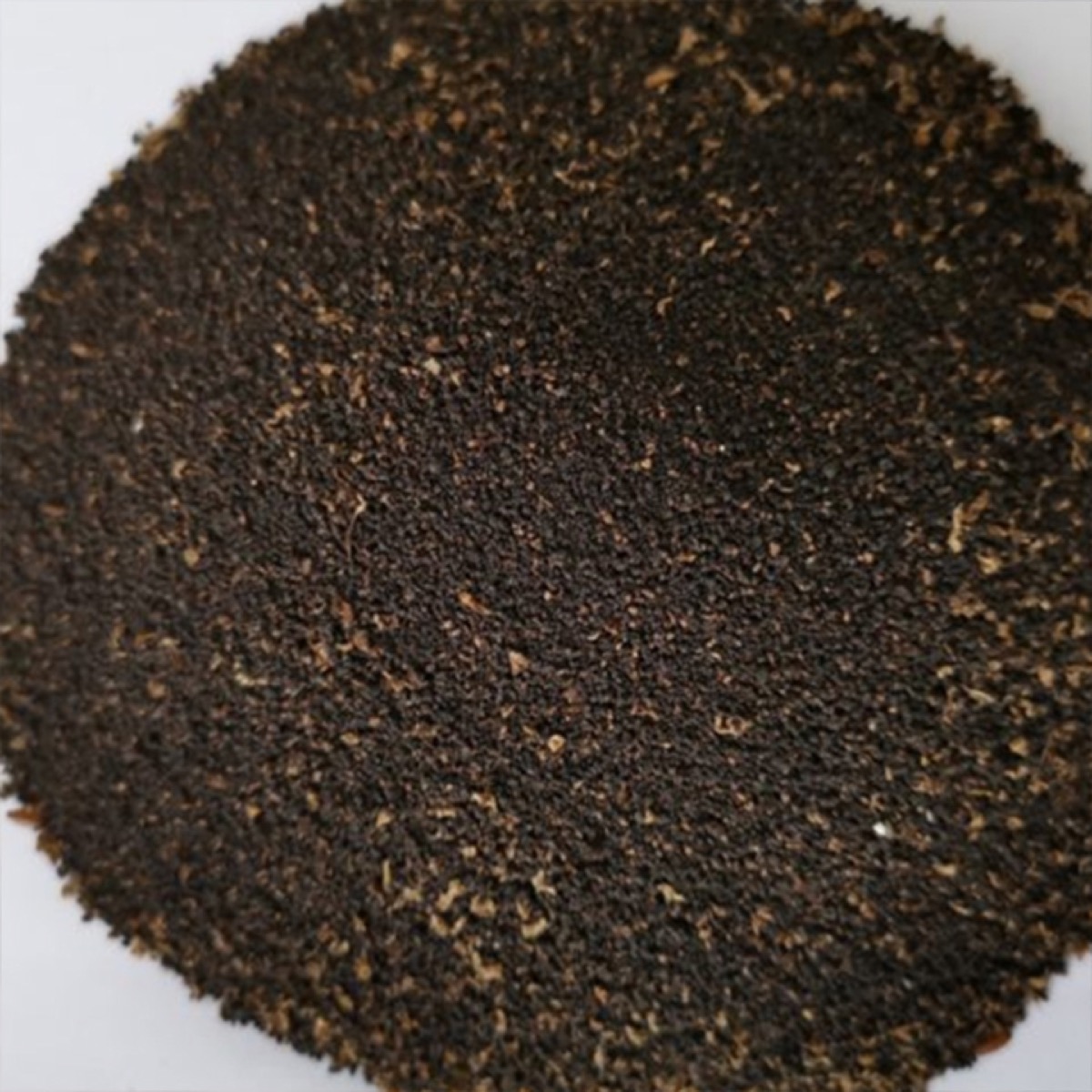
BSF Frass Fertilizer: What Growers and Soil Programs Should Verify
Evaluate BSF Frass by nutrient profile, organic matter, chitin, moisture, pH, EC, processing, crop trials, safety, documentation, and bulk sourcing needs.
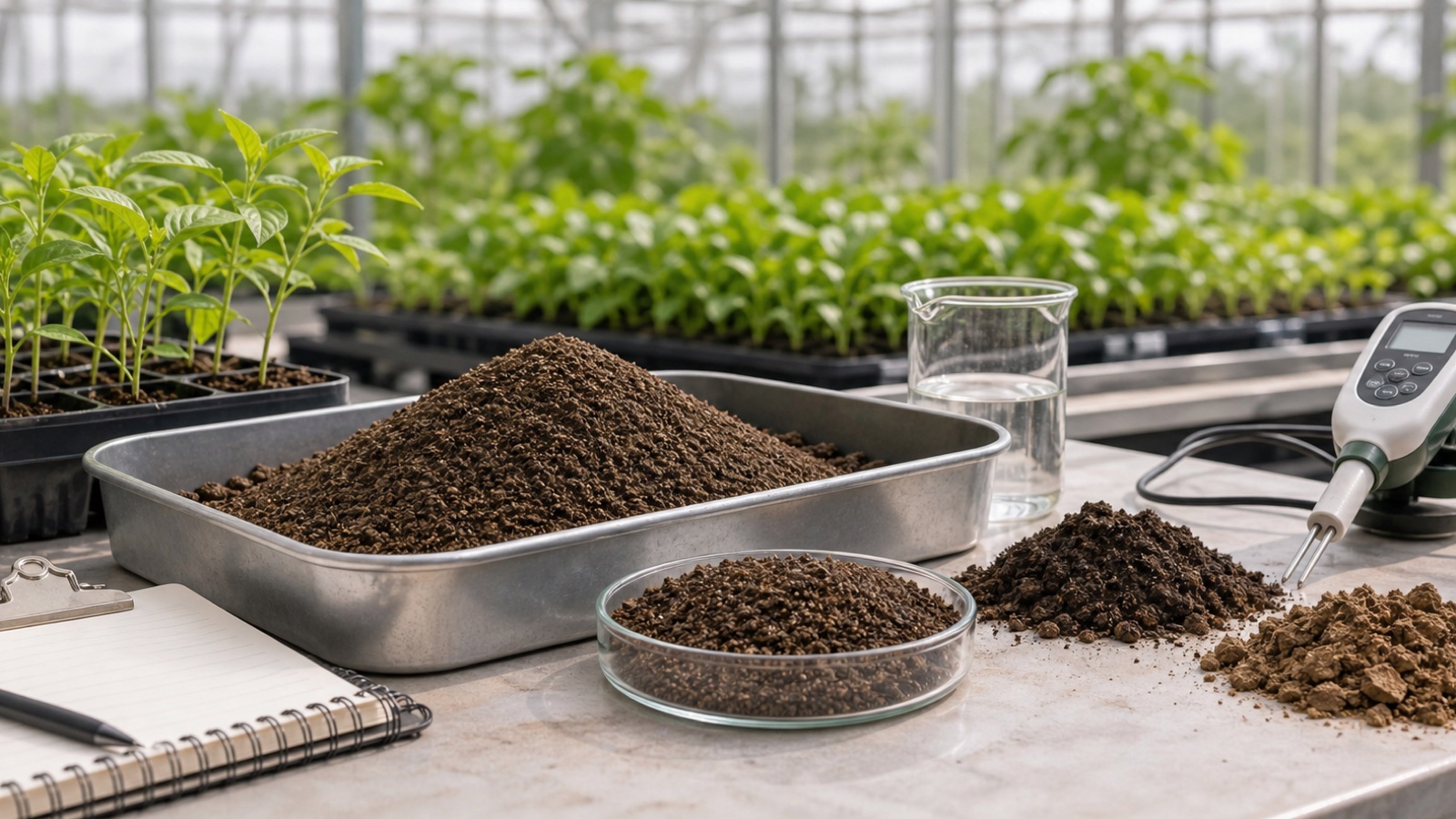
Answer summary
- BSF Frass should be evaluated as an organic soil amendment and circular agriculture output, not as an animal-feed ingredient or universal fertilizer claim.
- Practical value depends on nutrient profile, organic matter, moisture, pH, electrical conductivity, carbon-to-nitrogen ratio, particle size, processing method, microbial quality, and local soil-amendment rules.
- Published studies have evaluated insect frass in specific crop and soil systems, but those results should guide structured trials rather than broad product promises.
- Chitin and soil biology are useful research and formulation considerations, but they should not be converted into pest, disease, or yield guarantees.
- Buyers should request specifications, safety documentation, packaging options, destination-market requirements, and crop-trial support before scale-up.
BSF Frass at a glance: buyer evaluation matrix
| Evaluation factor | Why it matters | What buyers should ask |
|---|---|---|
| Nutrient profile | Determines fertilizer contribution and comparison with other inputs | Is N-P-K, organic matter, pH, EC, moisture, and C:N data available? |
| Organic matter and soil role | Supports soil-amendment positioning beyond nutrient delivery | What crop, soil type, and application method will be tested? |
| Chitin-related composition | Connects frass to soil biology research | Is it being evaluated as a research factor rather than a crop-protection claim? |
| Processing and safety | Affects handling, storage, microbial quality, and destination compliance | What drying, heat treatment, storage, and testing documentation can be shared? |
| Sourcing readiness | Determines whether the product can move from trial to program supply | What packaging, volume, destination, shelf life, and documentation are needed? |
What BSF Frass is in a circular production system
In a black soldier fly production system, valuable outputs do not stop at whole larvae, BSF Meal, and BSF Oil. Frass is the soil-oriented output associated with the bioconversion process. Depending on production and post-processing, it may include digested organic residues, larval excretion, and insect-derived residual material.
This is why BSF Frass belongs in a different buyer conversation from animal nutrition ingredients. Larvae, meal, and oil are evaluated mainly through feeding and formulation. Frass is evaluated through soil amendment value, circular production logic, agronomic fit, handling, safety controls, and local market compliance.
Why growers and soil programs evaluate BSF Frass
Growers, nurseries, gardens, soil-health programs, and circular agriculture projects may evaluate BSF Frass because it connects nutrient recycling with organic matter return. Research on insect frass fertilizer has examined crop growth, yield, nutrient quality, soil indicators, biological nitrogen fixation, and plant-soil interactions in different crop systems.
The responsible commercial position is not to claim the same result for every crop or every soil. The useful buyer question is whether a specific frass product fits the crop, soil condition, application method, destination market, packaging need, and documentation requirement. Crop trials and soil testing should guide broader use.
Crop and soil evidence: what research can and cannot prove
Published studies have evaluated BSF-composted organic fertilizer and insect frass fertilizer in vegetable and field-crop contexts, including tomato, kale, French bean, leafy vegetables, bush bean, potato, and other production systems. These studies are useful because they show how researchers measure frass value: crop growth, yield, nutrient uptake, soil indicators, biological activity, and the interaction between application rate and crop response.
The commercial lesson is not that every frass product performs the same way. Frass composition can vary with feedstock, rearing method, harvest point, separation, drying, heat treatment, storage, and granulation. Buyers should use research as a reason to run structured trials, request specifications, and compare batches rather than rely on broad category-level claims.
BSF Frass vs compost, manure, and mineral fertilizer
| Input | Common role | Buyer advantage | What to verify |
|---|---|---|---|
| Compost | Organic matter and soil conditioning | Familiar soil-building input | Maturity, stability, contaminants, nutrient consistency |
| Manure | Nutrients and organic material | Local availability and nutrient contribution | Odor, pathogen controls, stability, handling rules, contaminants |
| Mineral fertilizer | Targeted nutrient delivery | Predictable nutrient concentration | Soil test fit, crop plan, integrated nutrient strategy |
| BSF Frass | Soil amendment and circular agriculture output | Nutrient recycling story, organic matter, insect-derived composition | N-P-K, organic matter, pH, EC, moisture, processing, safety documentation |
Chitin, soil biology, and claim boundaries
Chitin-related composition is one reason frass receives attention in soil biology research. It can be discussed as a technical evaluation factor, especially when buyers are interested in plant-soil interactions, microbial indicators, or circular organic inputs.
The important boundary is claim discipline. Chitin should not be used as a shortcut for direct crop-protection claims, pest-control promises, or universal yield expectations. For commercial buyers, the safer and more useful position is to test BSF Frass within the target crop, soil type, application method, and local agronomic guidance.
Processing, safety, and regulatory expectations
Fertilizer and soil-amendment rules vary by destination market. This matters because frass is a biological material connected to organic substrate conversion, and buyers may need to evaluate processing, heat treatment, drying, storage, microbial indicators, and transport conditions before scale-up.
Recent research has examined heat treatment and storage of insect frass in relation to microbiological quality and regulatory expectations. For ACEWORM buyers, the practical sourcing question is straightforward: what processing method was used, what batch documentation is available, what testing can be provided on request, and what requirements apply in the destination country.
Specification and documentation checklist
- Nutrient profile: N-P-K, organic matter, moisture, pH, electrical conductivity, carbon-to-nitrogen ratio, and any crop-relevant indicators.
- Physical format: powder, granule, particle size, odor profile, impurity control, packaging format, bulk bags, pallets, or program supply.
- Safety and quality: processing method, drying or heat treatment, microbial testing, heavy metals or contaminant testing where relevant, shelf life, and storage guidance.
- Trial context: crop or soil program, intended application method, trial area, soil testing plan, destination country, and documentation needs.
- Commercial context: sample or trial supply, expected monthly or seasonal volume, packaging preference, shipping route, and repeat-supply requirements.
Best next page by buyer need
| Buyer need | Best next page | Reason |
|---|---|---|
| Review ACEWORM Frass product details | BSF Frass | Product page for positioning, applications, packaging, and inquiry |
| Browse soil amendment product category | Frass fertilizer catalog | Shows Frass within the full Products catalog structure |
| Understand production inputs and circular logic | Feedstocks | Connects frass to managed input streams and bioconversion context |
| Review production controls | Controlled BSF Production | Explains why processing and batch consistency matter |
| Prepare sourcing questions | Global Buyers Checklist | Converts product interest into quote-ready documentation and supplier questions |
Quote-ready inquiry checklist
- Product needed: BSF Frass, trial supply, bulk bags, pallets, or recurring program supply.
- Application: farm soil amendment, commercial growing program, garden or nursery use, soil trial, or circular agriculture project.
- Technical needs: N-P-K, organic matter, moisture, pH, EC, C:N ratio, particle size, microbial testing, contaminant testing, and storage guidance.
- Trial needs: crop, soil type, trial area, application method, season, soil-test plan, and local agronomic requirements.
- Commercial needs: destination country, expected monthly or seasonal volume, packaging preference, documentation needs, and scale-up timeline.
- Use Request BSF Frass specifications when these details are ready.
References
Black Soldier Fly-Composted Organic Fertilizer Enhances Growth, Yield, and Nutrient Quality of Three Key Vegetable Crops in Sub-Saharan Africa. DOI: https://doi.org/10.3389/fpls.2021.680312 Black soldier fly frass as a sustainable organic fertilizer: enhancing productivity of leafy vegetables and soil health in Benin. DOI: https://doi.org/10.3389/fpls.2025.1663593 Insect frass fertilizer as a regenerative input for improved biological nitrogen fixation and sustainable bush bean production. PubMed: https://pubmed.ncbi.nlm.nih.gov/39301159/ DOI: https://doi.org/10.3389/fpls.2024.1460599 Evolving dynamics of insect frass fertilizer for sustainable nematode management and potato production. DOI: https://doi.org/10.3389/fpls.2024.1343038 Heat Treatment and Storage of Frass From Black Soldier Fly Larvae and Yellow Mealworm Production: Compliance With EU Regulation on Microbiological Quality and Safety. PubMed: https://pubmed.ncbi.nlm.nih.gov/40439286/ DOI: https://doi.org/10.1002/mbo3.70020