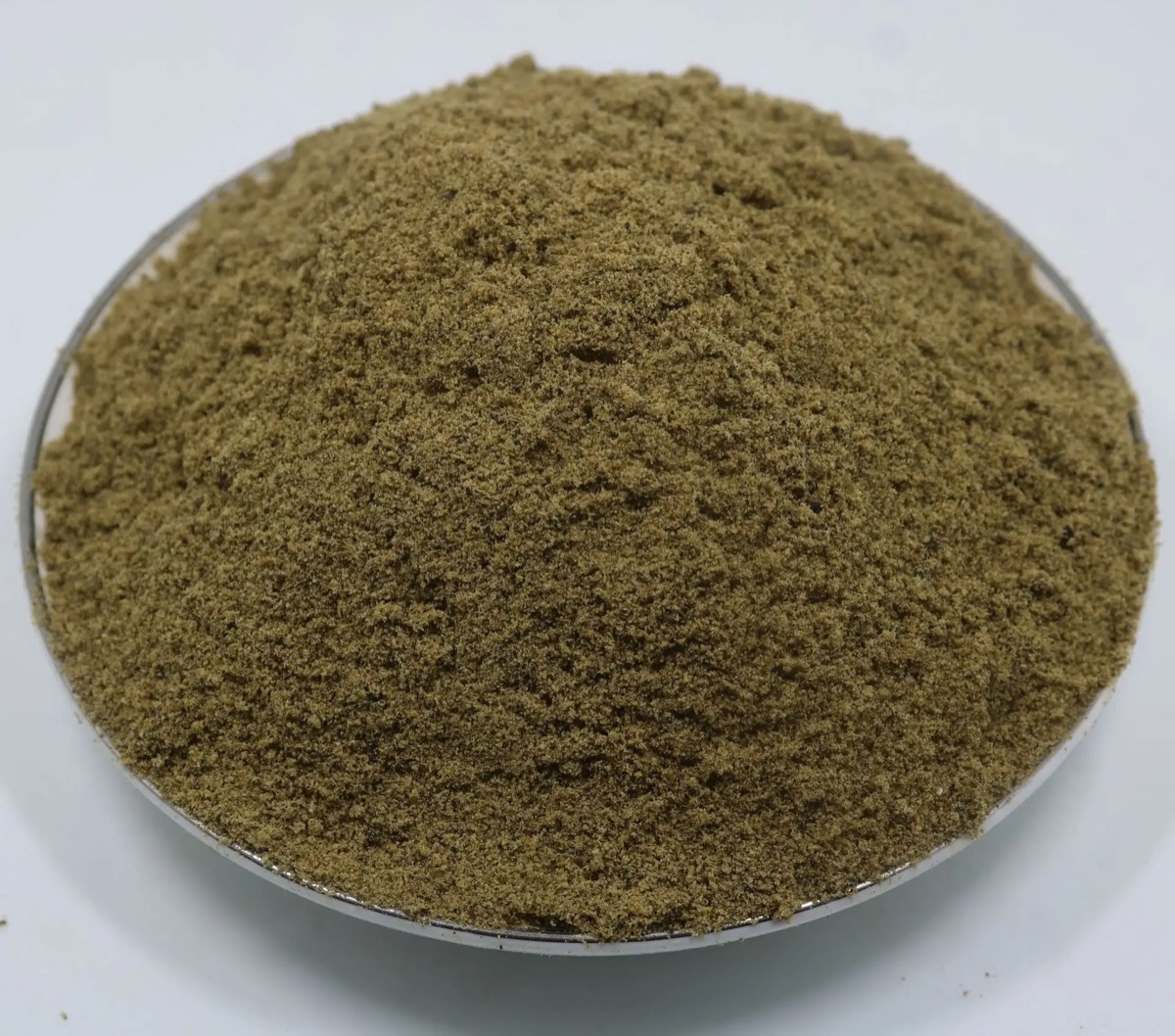
BSF Meal for Aquafeed: What Buyers Should Evaluate Before Replacing Fishmeal
Evaluate defatted BSF Meal for aquafeed by species fit, digestibility, amino acids, chitin, pellet behavior, trial design, specifications, documentation, and bulk sourcing needs.
Answer summary
- BSF Meal should be evaluated as a partial fishmeal-reduction and protein-diversification ingredient, not as a universal one-to-one fishmeal replacement.
- Species, life stage, full-diet formulation, processing method, and inclusion logic can change the result.
- Buyers should look beyond crude protein and verify digestibility, amino acids, chitin or fiber indicators, residual fat, ash, particle size, pellet behavior, water stability, and documentation.
- Published aquaculture studies support structured evaluation of black soldier fly larvae meal, but results should not be generalized across shrimp, trout, seabass, yellowtail, catfish, and other aquatic species.
- Before scaling, buyers should request BSF Meal specifications, samples, packaging options, destination-market information, and trial-support documentation.
Why aquafeed buyers evaluate BSF Meal
Aquafeed buyers are under pressure to diversify protein sources while maintaining growth performance, feed efficiency, animal welfare, water quality, and cost control. Fishmeal remains valuable, but price volatility, supply pressure, and sustainability targets have pushed formulators to evaluate additional protein inputs.
Defatted BSF Meal fits this discussion as a specification-driven ingredient for aquafeed trials and quote-based sourcing. The commercial question is not whether it can replace fishmeal everywhere. The practical question is where it can reduce fishmeal dependency in a specific formula, at what trial logic, and under what technical controls.
Evidence from aquaculture studies
| Evidence area | What studies help evaluate | Buyer interpretation |
|---|---|---|
| Shrimp and defatted BSF meal | In vitro and in vivo digestibility methods | Digestibility should be tested for crustacean applications, not assumed from crude protein |
| Brown trout | Full-fat BSFL meal in fishmeal-reduction diets | Inclusion response and digestibility indicators can change with diet design |
| Rainbow trout and African catfish | BSF meal in fry diets | Species response differs, so one fish result should not be copied to another species |
| Asian seabass juveniles | Defatted BSFL meal replacing fishmeal in a preliminary study | Low-to-moderate replacement concepts need species-specific validation and caution at higher substitution levels |
| Yellowtail | Partially or completely defatted BSFL meal | Defatting level and fat fraction can affect how the ingredient behaves in the formula |
| Reviews and meta-analysis | Cross-study patterns in aquafeed use | Research supports evaluation, but variability by species, meal type, and substitution level remains important |
What to verify before reducing fishmeal
A responsible aquafeed evaluation should start with the exact ingredient form. Buyers should confirm whether the material is defatted meal, full-fat meal, partially defatted meal, hydrolyzed material, or another insect-derived format. These are not interchangeable in formulation.
For core nutrition, buyers should review crude protein, crude fat, ash, moisture, amino acid profile where available, mineral profile, chitin or fiber indicators, particle size, odor, processing method, microbiological indicators, contaminant testing where relevant, and batch identity. These details affect nutritional contribution, production behavior, storage, and comparison with fishmeal or blended protein systems.
For broader comparison against fishmeal and soybean meal, buyers can use the BSF Meal vs Fishmeal and Soybean Meal guide as the next formulation framework.
Species and life stage change the answer
BSF Meal should not be evaluated with a one-size-fits-all assumption. Shrimp, crabs, carnivorous fish, omnivorous fish, fry, juveniles, and grow-out diets may all require different trial logic. A result from one species, feed format, or life stage should be treated as evidence for planning, not as a universal recommendation.
For early-stage feeding, buyers should pay close attention to palatability, particle size, digestibility, and water stability. For grow-out formulas, feed conversion, growth performance, health indicators, final product quality, and total economics become more important. Buyers can use the Fisheries and Aquaculture guide to connect ingredient evaluation with aquatic animal application, while keeping exact feeding rates under qualified nutrition guidance and local rules.
Pellet behavior, palatability, and water quality
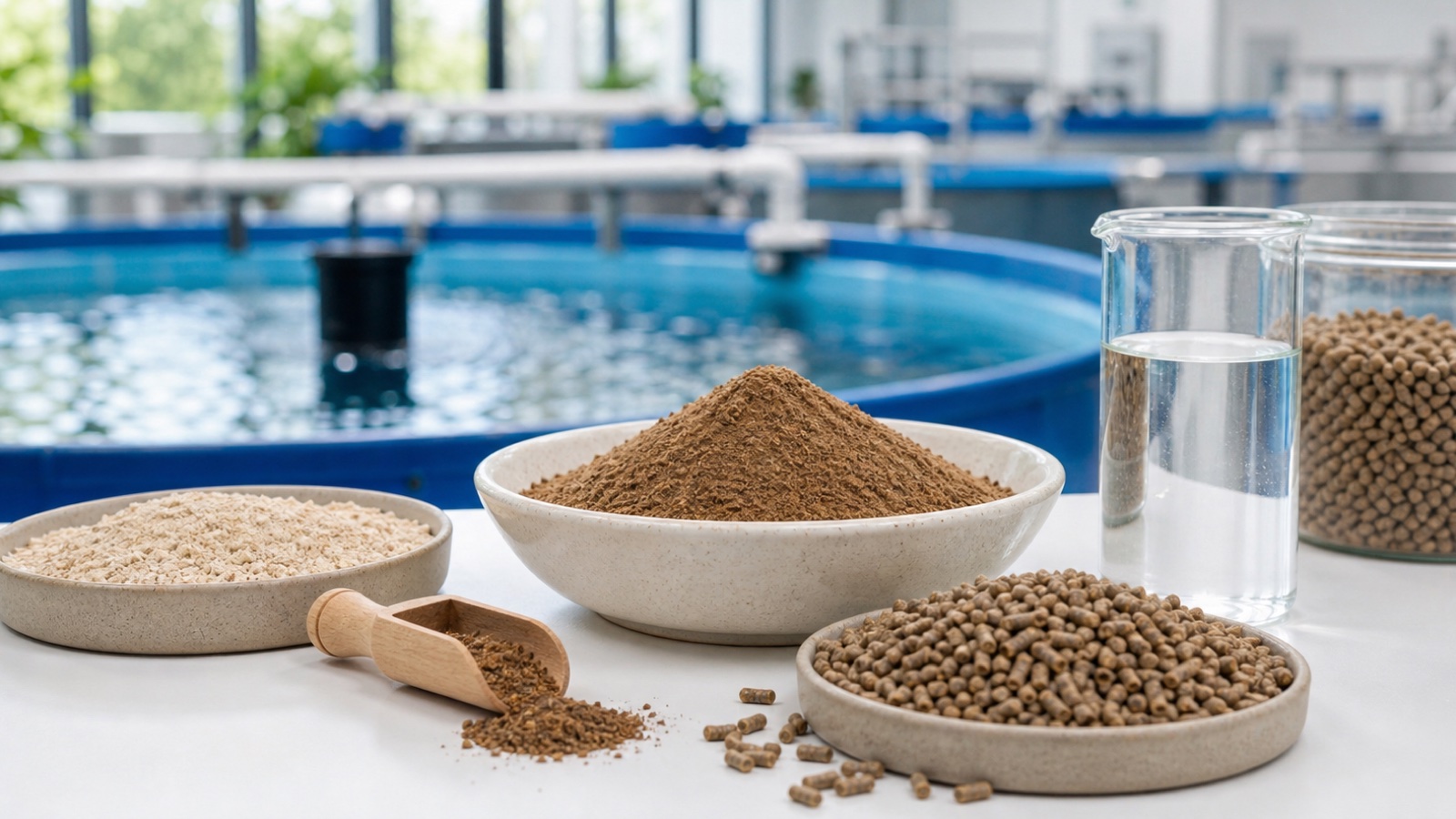
Aquafeed evaluation is not only a nutrient-table exercise. An ingredient must work inside the finished feed. Formulators may need to observe floating or sinking pellet behavior, water stability, fines, pellet durability, feed intake, feces quality, odor, and water quality during trials.
These checks matter because aquafeed is consumed in water. A protein ingredient that appears suitable on a specification sheet still needs validation in the target diet, feed-processing method, and farm or aquarium environment. Buyers should define trial metrics before comparing suppliers or scaling volume.
How to design an aquafeed trial
A practical trial usually starts with a control diet and one or more graded test diets. Where possible, diets should be compared with clear protein and energy logic, consistent processing conditions, and defined success metrics. The trial should track the questions that matter for the target buyer, such as feed intake, growth, feed conversion, digestibility-related indicators, survival, pellet behavior, water quality, and product quality.
The trial should also keep sample handling, storage, batch identity, and documentation consistent. If the sample, storage method, or particle size changes between rounds, the buyer may be comparing multiple variables at once. This is why specification-driven sourcing and trial discipline matter before bulk procurement.
Specification and documentation checklist
Before requesting a quote, aquafeed buyers should prepare the product needed, target species, life stage, formula goal, trial volume, desired packaging, destination country, and expected scale-up path. This makes the sourcing discussion more useful than asking for a generic price.
A strong document request may include product specification, amino acid data where available, crude protein, crude fat, moisture, ash, fiber or chitin indicators, particle size, processing notes, microbiology, heavy metals where relevant, storage guidance, shelf-life guidance, batch indicators, and documentation available on request.
For supplier and logistics preparation, buyers can use the global BSF sourcing checklist and controlled BSF production pages alongside this aquafeed article.
Best next page by buyer need
| Buyer need | Best next page | Reason |
|---|---|---|
| Review ACEWORM product details | BSF Meal product details | Product page for positioning, applications, package options, and inquiry |
| Connect ingredient use to fisheries and aquaculture | Fisheries and Aquaculture guide | Moves from ingredient evaluation to fisheries and aquaculture context |
| Compare protein alternatives | BSF Meal vs Fishmeal and Soybean Meal | Broader formulation comparison beyond aquafeed only |
| Prepare supplier questions | Global Buyers Checklist | Converts formulation interest into quote-ready documentation needs |
| Review production controls | Controlled BSF Production | Explains why feedstock, processing, batch, and storage controls matter |
Quote-ready inquiry checklist
- Product needed: BSF Meal, sample, trial quantity, or recurring supply.
- Target species and life stage: shrimp, fish, ornamental species, fry, juveniles, or grow-out program.
- Formula goal: fishmeal reduction, protein diversification, sustainability positioning, or technical trial.
- Trial design: control diet, test diet logic, sample quantity, expected duration, and success metrics.
- Technical needs: crude protein, fat, ash, moisture, amino acids where available, particle size, microbiology, heavy metals where relevant, shelf life, storage, and documentation.
- Commercial needs: destination country, estimated volume, packaging preference, trial timeline, and expected scale-up path.
- Use Request BSF Meal specifications when these details are ready.
References
Dornic et al., 2025. Sustainable Shrimp Feeding: Digestibility of Defatted Hermetia illucens Meal by In Vitro and In Vivo Methods. PubMed: https://pubmed.ncbi.nlm.nih.gov/41332996/ DOI: https://doi.org/10.1155/anu/7323773
Mikolajczak et al., 2022. The first insight into black soldier fly meal in brown trout nutrition as an environmentally sustainable fish meal replacement. PubMed: https://pubmed.ncbi.nlm.nih.gov/35468507/ DOI: https://doi.org/10.1016/j.animal.2022.100516
Liu et al., 2024. A preliminary study on the effects of substituting fishmeal with defatted black soldier fly larval meal on Asian seabass juveniles. PubMed: https://pubmed.ncbi.nlm.nih.gov/39175254/ DOI: https://doi.org/10.1111/jfb.15908
Bartucz et al., 2023. Black Soldier Fly Meal as Direct Replacement of Complex Fish Feed for Rainbow Trout and African Catfish. PMC: https://pmc.ncbi.nlm.nih.gov/articles/PMC10607934/ DOI: https://doi.org/10.3390/life13101978
Ido et al., 2021. Growth of Yellowtail Fed on a Diet Including Partially or Completely Defatted Black Soldier Fly Larvae Meal. PubMed: https://pubmed.ncbi.nlm.nih.gov/34442288/ DOI: https://doi.org/10.3390/insects12080722
Mohan et al., 2022. Use of black soldier fly larvae meal in aquafeeds for a sustainable aquaculture industry. Aquaculture. ScienceDirect: https://www.sciencedirect.com/science/article/pii/S0044848622002113 DOI: https://doi.org/10.1016/j.aquaculture.2022.738095
Gougbedji et al., 2022. Can Insect Meal Replace Fishmeal? A Meta-Analysis of the Effects of Black Soldier Fly on Fish Growth Performances and Nutritional Values. DOI: https://doi.org/10.3390/ani12131700
Rodriguez-Rodriguez et al., 2023. Evaluation of In Vitro Protein Hydrolysis in Seven Insects Approved by the EU for Use as a Protein Alternative in Aquaculture. PubMed: https://pubmed.ncbi.nlm.nih.gov/38200825/ DOI: https://doi.org/10.3390/ani14010096